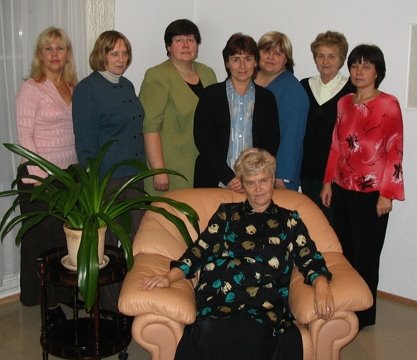
Like a rare coin collector, or a young outfielder with a baseball card collection, or even a collector of fine art from dynasties long ago, I am very excited to have these two pictures and, more importantly, to display them next to each other.
On the left are my good friends Emily, Doreen, Ian, and Ed Keating (l-r) of Geneva, Illinois, and on the right are the wonderful women of the public library right here in Tapa, including Kersti Burk (third from l) and Ere Käärmaa (third from r).
Having known Ed since I was in high school, Doreen since she married Ed, and Emily and Ian since they were born and having had Kersti and Ere keep me abreast of all things cultural for the last seven years, all of these people been a great support for me in many of the crazy things I have done, including returning to Tapa to teach English.
29 October 2006
Hea Sõbrad Ameerikast ja Eestist

21 October 2006
A story must have a place and time, and sooner or later, the audience, through words or actions or pictures, must recognize that place and time. Without place and time, the story is incomplete and the audience is confused.
A director's interpretation of a story may change the author's place and time but only to retell the story to another audience, to emphasize the story's theme, or to present a variation on the theme for the audience's consideration.
Who'da Thunk Tapa Was at the End of the Rainbow
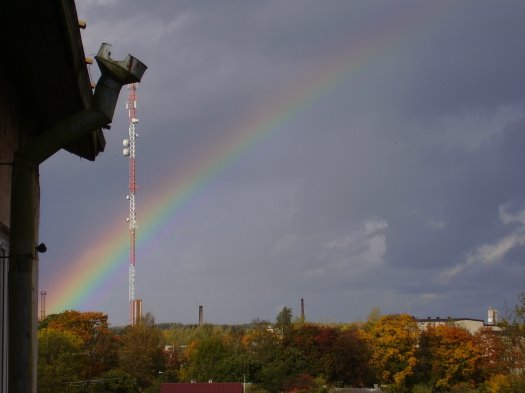
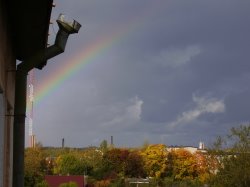
This rainbow appeared 06.10.06, and I took its picture from my balcony. Another one appeared 07.10.06, and I figured I was indeed in the right place.
02 October 2006

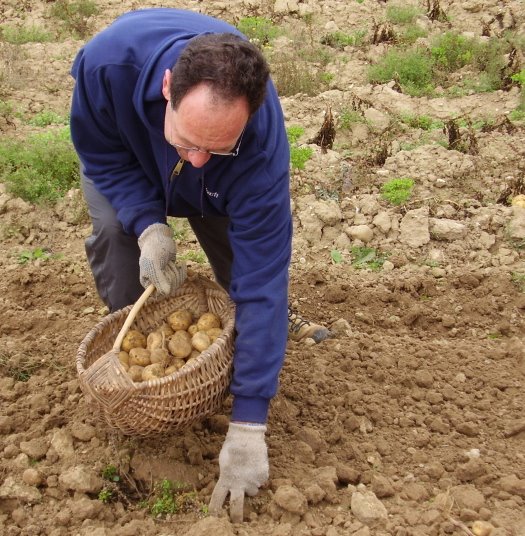
 The Estonia that tugs at my heart is about the land and about "taking" potatoes from it, with the neverending sky above and patches of autumn colors in the background.
24 September 2006
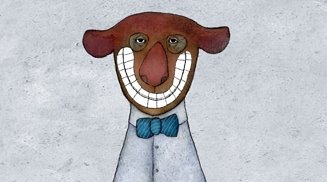


These are some of the cool graphics on ETV and on their web site. ETV (i.e., Estonian Television) is pretty close to PBS in America, at least in terms of programming.
Now, before the nightly news at 5 p.m. and 6 p.m., they promote Teatriaasta 2006, the year-long celebration of 100 years of Estonian theatre, with lively advertisements for upcoming concerts and performances. They sure beat getting brochures every week from the Goodman, Steppenwolf, and the Lyric Opera.

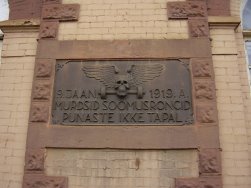
On September 21, 1944, as German forces left Tallinn, Estonia’s national flag was raised on Pikk Hermann Tower, the seat of the Estonian government. On September 22, the next day, Soviet troops conquered Tallinn. The country’s national tricolour was torn from the mast on the tower and was replaced by the red banner, the symbol of the new occupation. By the end of November, all of Estonia was again under Soviet control.
Estonia and the other occupied Baltic states were the only countries who had been overrun during the course of World War II but whose independence was not restored at the end of the war. Moreover, Estonia and the Baltic states were the only members of the League of Nations who were not given seats in the new United Nations.
Read more in The White Book, compiled by a special commission of the Estonian parliament.
23 September 2006
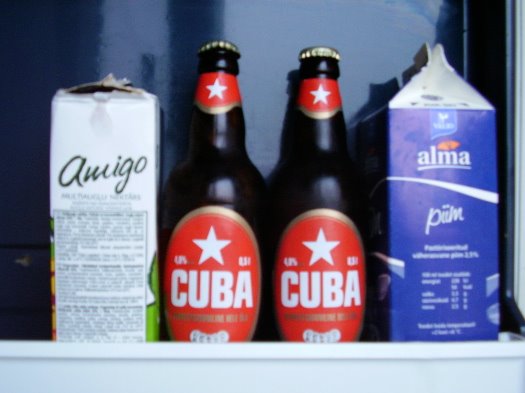
Another reason I love this country: the Alma milk is from Estonia and the Amigo juice is from Spain. No, it's not. That would make too much sense. I think the juice is from the Ukraine.
Cuba, the "revolutionary light" beer is definitely Estonian. Here, they are not afraid of Cuba. You can fly the 5,500 miles from Tallinn to Havana for less than $2,000.
19 September 2006
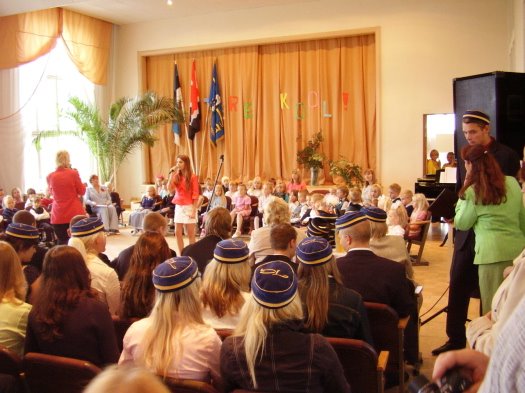
September 1 is the traditional first day of school in Estonia. After the official welcome, all of the students, except the first and twelfth graders, go to their homerooms. In a nice ceremony in the auditorium, the twelfth graders (each wearing their school cap, or tekkel) welcome the first graders by giving them school caps, too. So I think every student in Estonia has a school tekkel.
Tapa Gümnaasium is an elementary, middle, and high school. So this September 1 ceremony is filled with the symbolism of first/last and youngest/oldest as well as of the beginning of a journey - through childhood and adolescence and into adulthood.
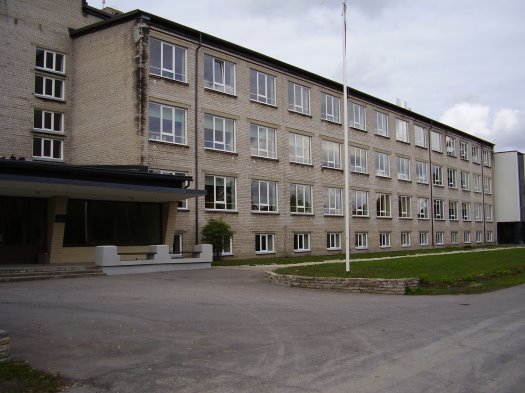
Tapa Gümnaasium, where I teach English to 8th, 9th, 10th, 11th, and 12th graders.
18 September 2006

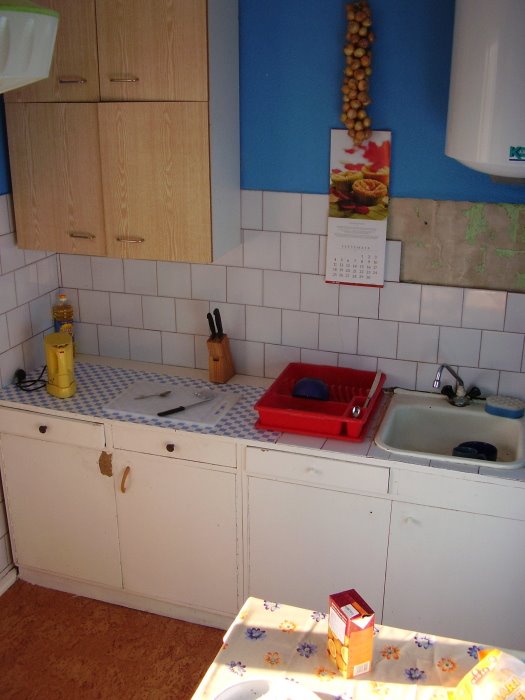

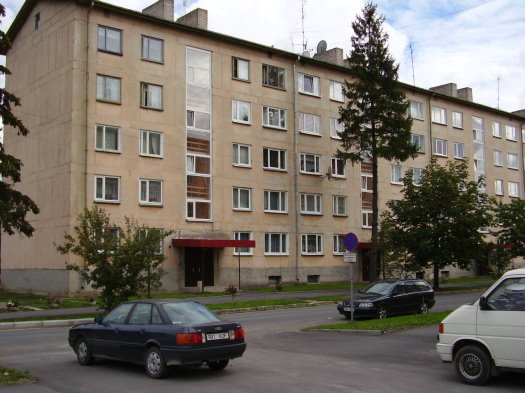
My apartment building and my front door.
I'm on the fifth floor, and the third and fourth windows (not counting the stairwell windows)from the left are my kitchen and bedroom windows, respectively, in case you wanted to drop in from the roof.
I live on Lembitu Street, and Kreutzwalk wrote a poem about Lembitu, who lived so long ago he has only one name.

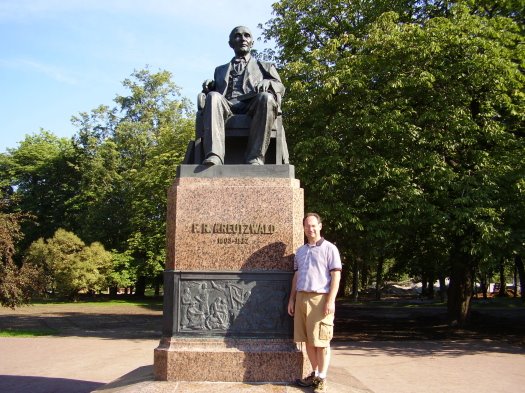
Tere tulemast Eestimaale.
Here, somewhat fittingly, I think, Friedrich Reinhold Kreutzwald, the author of the first original Estonian book and the father of Estonia's national literature, welcomes me to Estonia.